town planning guide
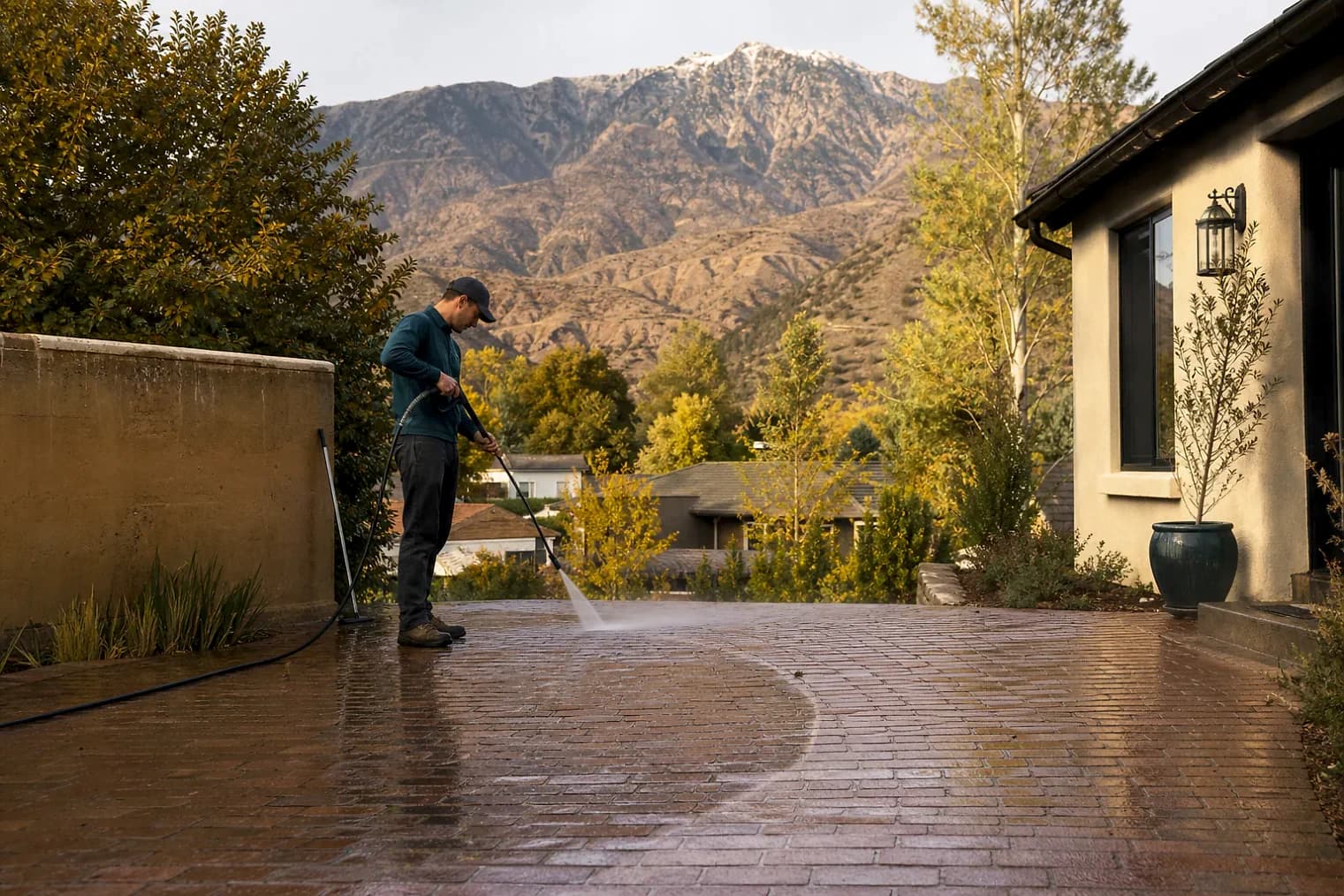
Pressure washing in Interlaken: providers, services, and costs
Interlaken has a cool, high-elevation four-season setting. NASA POWER 2001–2020 regional climatology estimates about 20.3 inches of precipitation per year, a 18°F mean in the coldest month, and a 67°F mean in the hottest month. Use these conditions to plan timing, surface tests, water handling, and a quote-ready scope; confirm the serving water system and property conditions at the address.
Local intermission
A little Interlaken personality.
“It’s not far from Interlaken.” “In minutes or in Utah miles?” “Yes.”
Unofficial Interlaken truth: the canyon breeze always finds the one thing that was not tied down. That is the Wasatch Front living in one sentence.
Local color, lovingly made up.
Weather translated into decisions
What Interlaken conditions mean for exterior cleaning
These are 2001–2020 averages from the NASA POWER regional climatology grid nearest the official place reference point. They are planning context—not a parcel measurement, live forecast, or promise that every year is typical. Elevation, aspect, canyon exposure, and urban shade can change conditions over short distances.
A practical seasonal plan
after overnight freezes ease
Spring
Inspect winter damage, deicer residue, roof-edge debris, irrigation leaks, and unstable coatings before washing.
about 67°F in the hottest month
Summer
Start early or use shade, test glass and metal temperature, and divide large elevations so cleaning solution does not dry on the surface.
before sustained overnight freezing
Autumn
Clear organic debris, check drainage paths, and complete coating-safe cleaning while surfaces can dry fully.
about 18°F in the coldest month
Winter
Use the live forecast. Avoid washing when water can freeze on surfaces or walkways, and treat urgent work as an ice-control job rather than routine scheduling.
Always use the short-range forecast and surface temperature on the work date; historical averages cannot decide whether a particular day is safe.
Prevent avoidable mineral spotting
Check water hardness at the address—not by city name.
A Interlaken mailing address does not identify one hardness value. A place can have multiple public water systems, blended sources, seasonal changes, or a private well. Hardness can leave scale when rinse water evaporates, especially on glass, dark paint, metal, and solar panels, but total dissolved solids (TDS) must not be presented as if it were a hardness result.
Find the right number
- Identify the serving utility from the bill or address.
- Open its current consumer confidence report and search for “hardness” or “calcium carbonate.”
- Use a value stated as mg/L as CaCO₃; divide by 17.1 only if you need grains per gallon.
- If hardness is not reported, ask the utility or test the property water. Do not substitute TDS.
Put it into the cleaning plan
- Keep sections small enough to rinse before droplets dry.
- Ask how windows, black trim, polished metal, and panels will be finished.
- Consider a purified-water final rinse for spot-sensitive surfaces.
- Distinguish existing irrigation scale from new wash-water spotting in the test area.
“Have you checked our source water and the surfaces most likely to spot, and is a spot-free final rinse included where needed?”
Find the serving utility’s water-quality report · Read the USGS hardness definition
Choose by surface
What are you cleaning?
“Power washing” is a broad search term. The safer method depends on the material, coating, stain, drainage, and desired finish. Start with the relevant scope guide before requesting prices.
Before contacting a provider
Build a quote-ready property brief.
Give every provider the same information. Their prices and proposed methods will be easier to compare.
Surface and condition
- Material and existing coating
- Approximate square or linear footage
- Organic growth, oil, rust, mineral, or unknown staining
- Cracks, loose mortar, oxidation, failing paint, or prior repairs
Access and protection
- Stories, roof pitch, slopes, gates, and narrow setbacks
- Plants, vehicles, furniture, outlets, cameras, and solar equipment
- Water source and any parking or pedestrian controls
- Where rinse water and loosened debris can safely go
Pressure is only one part of the method.
A responsible proposal should explain the complete process: inspection, test area, cleaning agent, dwell time, pressure, temperature if relevant, rinse, runoff control, and final check. More pressure is not automatically more effective, especially on painted finishes, stucco, wood, roofs, seals, and aging masonry.
Current provider audit
Published coverage that includes Interlaken
These results use only an exact place name, an area phrase containing the place name, or a statewide Utah claim. Office proximity is not treated as proof of coverage.
Alta Janitorial
Established Utah janitorial provider offering pressure washing as part of a broader commercial cleaning portfolio.
Coverage basis: The provider publishes statewide Utah coverage.
Quote process: The provider says price depends on square footage, frequency, and scope.
Review provider evidence →Alvarez Dirt Squad Power Wash
Syracuse-based residential and commercial pressure-washing provider publishing water-reclamation and environmental-practice claims.
Coverage basis: The provider publishes statewide Utah coverage.
Quote process: Residential and commercial scope is priced through direct contact.
Review provider evidence →Trident Pressure Washing
Utah pressure-washing provider publishing a $0.35 per square foot statement for its advertised cleaning scope.
Coverage basis: The provider publishes statewide Utah coverage.
Quote process: The provider publishes a $0.35 per square foot statement and directs other scopes to direct contact.
Review provider evidence →Price the same scope
What changes an exterior-cleaning quote?
Measured area is only the starting point. Condition, working height, difficult access, obstacles, pretreatment, water availability, recovery requirements, and after-hours work can change the total. Ask whether the price includes setup, protection, stain treatment, rinsing, cleanup, and tax.
Build a non-binding planning range
The estimator applies no unsupported Interlaken location multiplier.
Your five-minute provider test
Ask like a Interlaken local.
Skip the generic “Are you experienced?” script. These questions turn Interlaken’s weather, water, stains, and site conditions into useful conversations. Read the green flags, notice the dodges, and give every provider the same test.
The weather call
“What would make you postpone an exterior cleaning job in Interlaken?”
Why it matters hereInterlaken's coldest-month regional mean is 18°F. Freeze risk, surface temperature, shade, and drying time matter more than a convenient calendar slot.
Listen forA work-date forecast check, a safe drying window, surface-temperature judgment, and a clear rescheduling rule if water could freeze.
Watch out for“We work year-round” with no explanation of ice control, overnight lows, shaded walks, or how conditions in Interlaken change the call.
The stain diagnosis
“Before you quote pressure washing in Interlaken, how will you tell organic growth from dirt or mineral deposits?”
Why it matters hereWith about 20.3 inches of modeled annual precipitation, shaded walls, roof-drip lines, dense planting, and slow-drying paving deserve a closer look—not one treatment for every dark mark.
Listen forA site inspection or useful photos, stain identification, a discreet test patch, material-compatible chemistry, and realistic expectations for what may remain.
Watch out for“More pressure will get it off.” Pressure alone can scar wood, etch concrete, drive water behind finishes, or leave the cause of the stain untreated.
The spot-free finish
“Which surfaces at my Interlaken address could show water spots, and what final rinse is included?”
Why it matters hereA Interlaken mailing address does not prove one water-hardness value. The serving utility, blended source, season, or a private well can change the water at the tap.
Listen forThey identify the actual water source or test it, distinguish hardness from TDS, flag glass, solar panels, dark paint, and metal, then price a purified-water rinse if it is needed.
Watch out forA made-up “city hardness” number, TDS presented as hardness, or a promise that ordinary rinse water can never spot.
The boundary test
“Walk me through where the wash water, loosened debris, and overspray will go on this Interlaken job.”
Why it matters hereEven a fairly calm regional average does not predict the work-hour gusts, slopes, drains, or property boundaries at your address. The useful answer must fit this property's drains, grade, landscaping, neighboring surfaces, vehicles, and public paths.
Listen forA pre-work walkaround, named drain and overspray controls, protection or relocation of vulnerable items, and a weather-based stop rule.
Watch out for“It is only water.” Cleaning agents, dirty runoff, and airborne mist still need a destination and a property-specific plan.
The quote reality check
“What might still be visible after cleaning, and what could change the written price for this Interlaken property?”
Why it matters hereFreeze damage, failed coatings, etched mineral marks, deep oil, oxidation, access surprises, and hidden repairs are not all cleaning problems. Naming them now makes competing quotes much easier to compare.
Listen forDocumented pre-existing damage, explicit inclusions and exclusions, a defined finish, photos or a walkthrough at completion, and approval before any paid extra work.
Watch out forA guaranteed “like new” result, vague stain-removal language, or permission to add charges without a written change order.