Practical Utah buyer guide
Graffiti removal
Graffiti removal is a compatibility problem: the marking and the surface beneath it may respond to the same solvent, heat, pressure, or abrasion. A successful plan starts with a small test and an agreed result—full removal, acceptable shadow, repainting, or a coating system—not an unconditional promise.
Use this guide to define the work, compare like-for-like quotes, and inspect the result. It is not a substitute for a site-specific assessment.
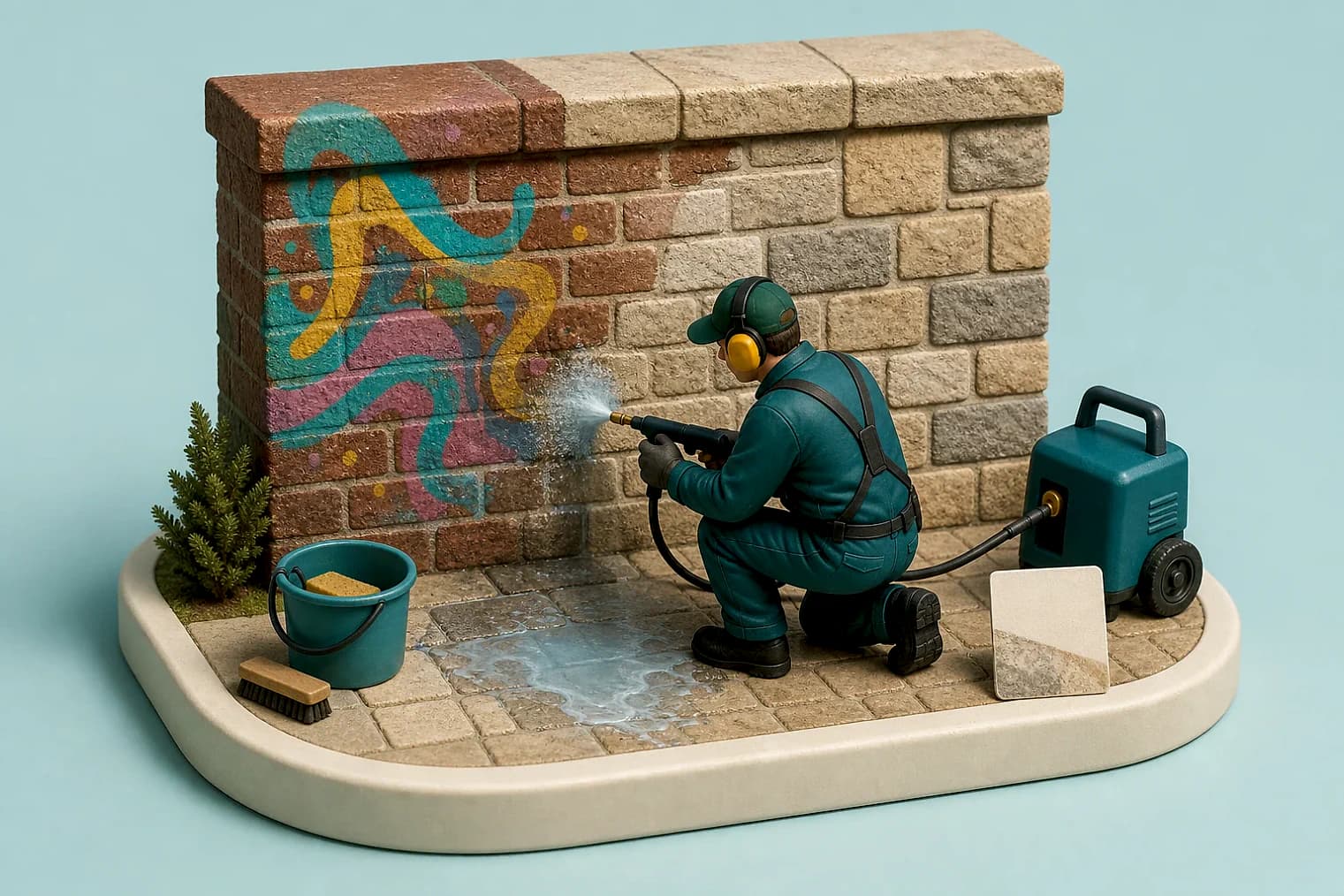
Start here
Is this the right service?
Record the marking material if known, age, layers, area, substrate, coating, temperature, and previous attempts. Porous masonry can hold pigment below the face; painted and anodized surfaces may lose their own finish before the graffiti disappears.
Time matters, but untested action can make removal harder by driving pigment deeper or spreading a halo. Sensitive, historic, public-art, or high-value surfaces warrant a conservator or façade specialist.
Usually a good fit
- Fresh, identified markings on a compatible, testable substrate
- A sacrificial or permanent anti-graffiti coating with known maintenance instructions
- A site where solvent, pigment, rinse water, pedestrians, and overspray can be contained
Pause or choose another trade
- Historic masonry, murals, monuments, or fragile finishes without specialist oversight
- Unknown hazardous markings or contaminated sharps and waste
- A proposal to blast porous masonry immediately without a test patch
Scope the method
Methods worth discussing
- Substrate-compatible remover tested with the least aggressive dwell and agitation
- Low or controlled-pressure rinse, possibly with heat, when the test shows no surface damage
- Poultice or repeat spot treatment for pigment held in pores
- Repainting where removal would harm the coating or leave a less acceptable patch
- Sacrificial or permanent anti-graffiti coating considered only after compatibility and maintenance are understood
“Pressure washing,” “power washing,” and “soft washing” are used inconsistently. The useful details are pressure at the surface, temperature, chemistry, dwell time, agitation, rinse plan, and protection.
What a considered job looks like
From inspection to handover
- Document before touching
Photograph scale, colors, layers, drips, shadows, substrate, coating, defects, nearby drains, and any prior cleaning.
- Build a test ladder
Try the least aggressive compatible option in a discreet area, increasing dwell or method only when the substrate remains acceptable.
- Approve the target result
Compare removal, ghosting, color, sheen, texture, and the alternative cost of repainting or coating.
- Contain and remove
Control solvent, pigment, rinse water, overspray, fumes, and public access while working from edges to avoid spreading.
- Neutralize and inspect dry
Complete product-directed rinsing or neutralization, remove waste, and assess halos and substrate change after drying.
Set expectations
What different marks may require
Spray paint on sound coated metal
A remover may also soften or dull the factory or painted finish. Repainting can be more predictable.
Paint on porous brick or concrete
Pigment can remain in pores as ghosting; excessive pressure or media can etch a clean patch.
Marker on painted or plastic surfaces
Solvents may smear the ink or attack the substrate. Short controlled tests are essential.
Graffiti over anti-graffiti coating
Follow the coating system's removal instructions and determine whether a sacrificial layer must be renewed.
Old or repeated layers
Different paints may need staged products, and earlier shadows can reappear as upper layers lift.
Risks to resolve before work starts
- Ghosting, halos, color change, sheen loss, etching, opened masonry pores, and removed coatings
- Solvent, aerosolized pigment, fumes, and contaminated rinse water affecting people or drains
- Hot water or pressure driving pigment deeper into porous materials
- Damage to nearby glass, sealants, signs, plants, vehicles, and painted surfaces
- A conspicuously clean patch that looks worse than the original weathered field
Compare the same job
What a useful written quote includes
- Photographs with scale, area, height, marking type and age if known, layers, and previous attempts
- Exact substrate, coating, condition, joints, sealants, and representative weathering
- Test-ladder method, approved result, acceptable ghosting, and stop point
- Products, dwell, heat, agitation, pressure, rinse, neutralization, and repeat applications
- Public, worker, drain, air, plant, glazing, sign, vehicle, and neighboring-property controls
- Waste capture and disposal plus repainting or coating options priced separately
Common exclusions to make explicit
- Guaranteed invisible removal from porous, weathered, or previously treated surfaces
- Color matching, repainting, repointing, coating renewal, and façade restoration unless itemized
- Hazardous-material testing and biohazard or sharps handling
- Permits, public-art approvals, traffic control, recovery, transport, and disposal unless stated
- Removal of underlying shadows or historic coatings discovered during the work
Before appointment day
How to prepare
- Photograph the marking and surrounding surface before cleaning or repainting
- Check whether police, insurer, owner, public-art manager, or preservation authority needs documentation or approval
- Keep people and vehicles out of the work and overspray zone
- Identify drains, ventilation intakes, delicate finishes, plantings, and occupied rooms
- Provide the coating or anti-graffiti product information if available
Do not inspect only while wet
Completion and aftercare
Walk the job before sign-off
- Inspect dry from normal viewing distance and close range for ghosting, halo, sheen, color, and texture change
- Compare the result directly with the approved test patch and stop point
- Check joints, edges, glass, signs, metal, plants, paving, and drains for pigment or residue
- Confirm waste and coverings are removed and the public area is safe
- Record whether repainting, coating renewal, or a later second treatment is recommended
After the crew leaves
- Allow the surface to dry fully before deciding whether a shadow needs another treatment
- Do not apply a coating until residues, neutralization, moisture, and product compatibility are resolved
- Retain before, test, and after photographs for future incidents
- If repeat vandalism is likely, combine rapid reporting, lighting, access design, and a maintainable coating rather than relying only on cleaning
Choose deliberately
Questions for each provider
- What are the marking and substrate, and what does the least-aggressive test show?
- What ghosting, color, sheen, or texture change should I expect?
- At what point would repainting be safer or more economical?
- How are solvent, pigment, rinse water, fumes, drains, and the public controlled?
- Does an existing anti-graffiti coating require renewal?
- Are repeat treatment, color matching, coating, reporting, and waste disposal included?
Warning signs
- A firm price given without asking about the surface, condition, access, water, or photographs
- A promise that maximum pressure will remove every mark, with no test area or damage discussion
- No clear plan for protecting people, plants, adjacent property, drains, and sensitive fixtures
- A quote that does not identify the surfaces included, likely result, exclusions, and who handles cleanup
- The provider guarantees perfect removal before seeing a test on the actual substrate
- Sandblasting, strong solvent, or maximum pressure is proposed as the first step
- No plan exists to contain pigment- or solvent-bearing waste
Quick answers
Frequently asked questions
Does graffiti become permanent if it is not removed immediately?
Older markings can be harder to remove, but rushing into an incompatible method can spread pigment or damage the substrate. Document it promptly and test first.
What is graffiti ghosting?
Ghosting is residual color or outline after the main marking is removed. It can result from pigment in pores, weathering differences, or change to the underlying finish.
Is repainting a failure?
No. On a painted surface, a prepared and color-matched repaint may be safer and more consistent than increasingly aggressive removal.