Practical Utah buyer guide
Roof cleaning and soft washing in Utah
Roof cleaning is specialist work because the surface is both a weather barrier and a fall hazard. Before discussing appearance, identify the roof material, condition, pitch, access method, manufacturer guidance, drainage path, and anything beneath the runoff.
Use this guide to define the work, compare like-for-like quotes, and inspect the result. It is not a substitute for a site-specific assessment.
Start here
Is this the right service?
Dark discoloration may be organic growth, dirt, metal runoff, or a material change; the remedy is not interchangeable. A roof inspection should separate cleanable buildup from failed shingles, damaged tiles, coating loss, corrosion, leaks, or underlayment problems.
Cleaning can improve appearance but does not extend every roof's life or fix defects. If the roof is brittle, loose, leaking, heavily granulated, or near replacement, consult a qualified roofing professional before allowing cleaning or foot traffic.
Planning a local project? Review roof-cleaning conditions and published provider coverage in the Salt Lake City pressure washing guide or Park City pressure washing guide before requesting comparable quotes.
Usually a good fit
- Compatible roof material in serviceable condition with identified surface growth
- A provider who can explain manufacturer-compatible treatment and minimize roof traffic
- A site where gutters, outlets, metals, plants, people, pets, and neighboring property can be protected
Pause or choose another trade
- Active leaks, loose or broken units, exposed underlayment, severe granule loss, or unstable decking
- Unknown material or coating with no compatibility information or test plan
- A proposal to pressure wash asphalt shingles or indiscriminately walk a fragile roof
Scope the method
Methods worth discussing
- Material- and manufacturer-compatible low-pressure treatment rather than forceful mechanical removal
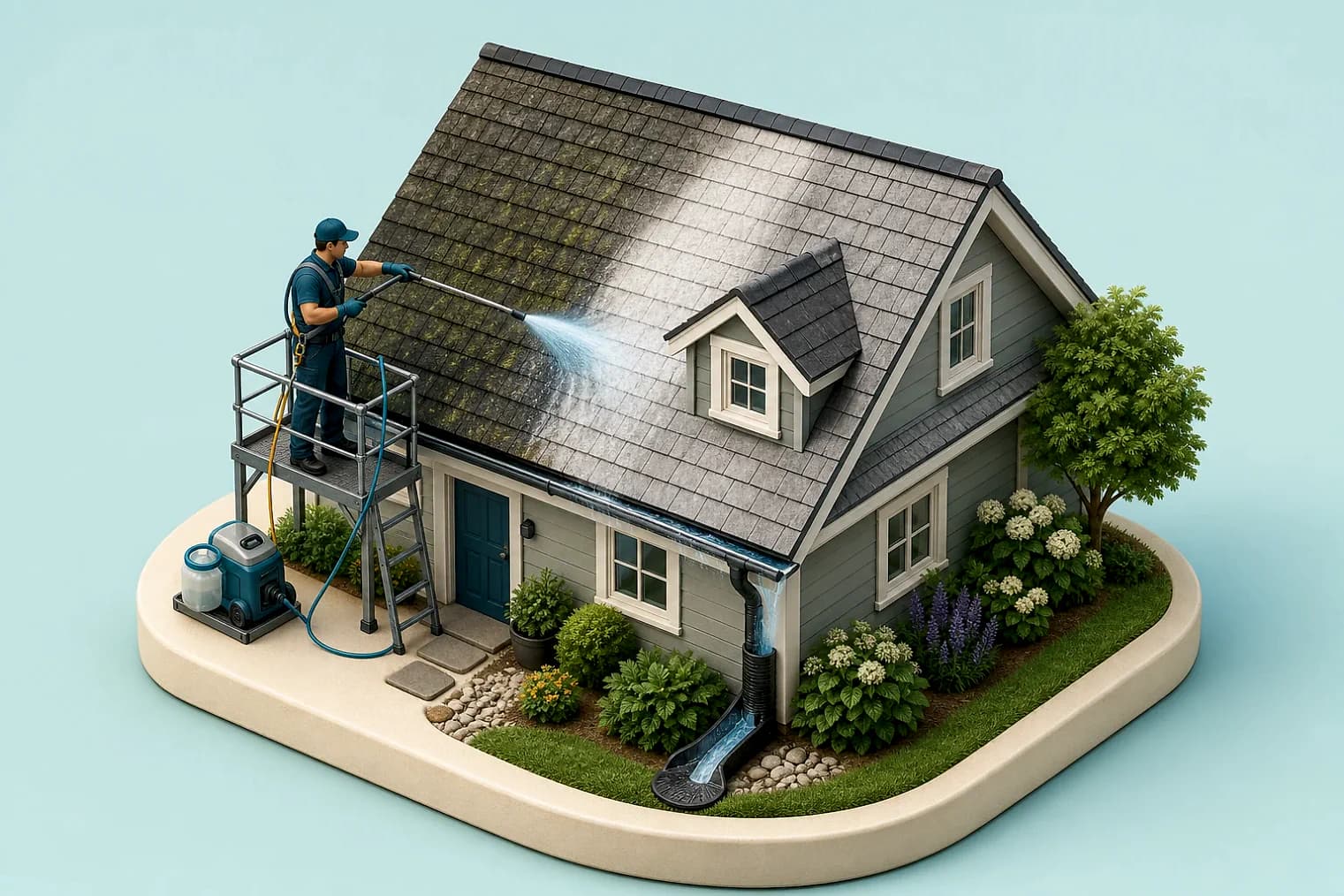
- Ground, ladder, scaffold, lift, or limited roof access selected for the building and fall-control plan
- Sectional application with controlled runoff and monitoring of gutters, downspouts, metals, and landscaping
- Manual removal of loose debris only where it can be done without lifting, cracking, or abrading roof components
“Pressure washing,” “power washing,” and “soft washing” are used inconsistently. The useful details are pressure at the surface, temperature, chemistry, dwell time, agitation, rinse plan, and protection.
What a considered job looks like
From inspection to handover
- Confirm roof condition
Identify material, age if known, pitch, defects, prior coatings, drainage, solar equipment, and safe access. Refer repair concerns to the appropriate roof trade.
- Set an access and protection plan
State whether anyone will walk the roof, what equipment will be used, how falling objects and overspray are controlled, and who occupies exclusion zones.
- Test compatibility
Confirm the treatment and likely visual result on a representative area, including reaction with metals, gutters, sealants, and adjacent finishes.
- Apply and manage runoff
Work in controlled sections, keep treatment within the agreed dwell, and monitor every outlet and vulnerable area throughout—not only at completion.
- Final inspection
Check roof components from safe viewpoints, clear agreed debris, rinse protected areas as planned, and document stains that need weathering or repeat treatment.
Set expectations
What different marks may require
Organic streaking or growth
Compatible treatment may kill growth before all discoloration disappears. Some residue releases gradually with weather rather than aggressive rinsing.
Moss and lichen
Thick growth may be treated and allowed to detach over time; forceful scraping can damage the roof. Agree on whether dead growth remains temporarily.
Rust, chimney, or metal runoff
May require a separate test and correction of the source. Some staining is permanent or unsafe to treat on the roof material.
Granule loss, fading, and coating failure
These are material conditions, not dirt. Cleaning cannot restore missing material or uniform color.
Risks to resolve before work starts
- Falls, dropped tools, wet access surfaces, and fragile roof components
- High pressure, scrubbing, or foot traffic can damage shingles, tiles, seams, coatings, flashings, and warranties
- Treatment runoff can affect gutters, downspouts, painted metal, copper, solar hardware, plants, ponds, and adjacent property
- Water can enter through existing defects, vents, lifted laps, or poorly directed spray
- Overspray and residue can reach pedestrians, vehicles, neighboring roofs, and air intakes
Compare the same job
What a useful written quote includes
- Roof material, approximate age and area, pitch, height, stories, and each included section
- Observed growth versus suspected material defects, with photographs and test expectations
- Access method, roof-walking policy, fall controls, lift or scaffold costs, and ground exclusion zones
- Treatment, pressure, dwell, rinse or weathering plan, and repeat-visit terms
- Protection for gutters, outlets, metals, solar equipment, siding, glass, plants, ponds, people, and neighbors
- Debris handling, runoff destination, weather cancellation rules, inspection record, and exclusions
Common exclusions to make explicit
- Roof repair, leak diagnosis, warranty determinations, and replacement
- Gutter debris removal, downspout disassembly, solar-panel cleaning, and exterior window cleaning unless listed
- Immediate disappearance of all dead growth or permanent material discoloration
- Plant replacement, runoff recovery, lift rental, traffic control, or neighbor access unless assigned
Before appointment day
How to prepare
- Arrange a roofer's opinion first if there are leaks, loose materials, or structural concerns
- Close windows, move vehicles and furnishings, and keep people and pets out of the work and runoff zones
- Identify cisterns, rain barrels, ponds, edible gardens, delicate plants, copper, and unconnected downspouts
- Provide gate access and disclose alarms, cameras, overhead lines, solar shutoffs, and fragile landscaping
- Tell neighbors when access, overspray risk, or shared drainage could affect them
Do not inspect only while wet
Completion and aftercare
Walk the job before sign-off
- Review before-and-after photographs from safe viewpoints rather than climbing onto a wet roof
- Confirm gutters, outlets, downspouts, metals, siding, glass, solar components, and landscaping were checked
- Document remaining growth and whether it is expected to weather away or needs a scheduled follow-up
- Confirm debris is removed from the agreed areas and no outlet remains blocked
- Record any newly observed roof defect separately from a cleaning result
After the crew leaves
- Keep people and pets away from drainage areas until the provider says the site is reopened
- Monitor delicate plants and rinse only as instructed in the agreed protection plan
- Do not pull or scrape treated growth from shingles or tiles
- Arrange roof repair promptly if cleaning exposed loose, cracked, corroded, or leaking components
Choose deliberately
Questions for each provider
- What is this roof material and condition, and is cleaning appropriate before repair?
- What manufacturer-compatible method and treatment will you use?
- Will anyone walk the roof, and what alternative access was considered?
- How are gutters, metals, solar equipment, plants, ponds, air intakes, and neighboring property protected?
- Will growth disappear during the visit or weather away, and is a follow-up included?
- What roof, runoff, or property condition would make you stop work?
Warning signs
- A firm price given without asking about the surface, condition, access, water, or photographs
- A promise that maximum pressure will remove every mark, with no test area or damage discussion
- No clear plan for protecting people, plants, adjacent property, drains, and sensitive fixtures
- A quote that does not identify the surfaces included, likely result, exclusions, and who handles cleanup
- The provider proposes high-pressure washing of asphalt shingles or cannot explain material compatibility
- No one has identified where every gutter and downspout releases treatment water
- Roof walking is assumed without discussing material condition, pitch, access, and fall controls
Quick answers
Frequently asked questions
Should a roof be pressure washed?
Asphalt shingles and many other roof systems can be damaged by high pressure. The correct approach depends on the exact material and manufacturer guidance; ask for pressure at the surface and the access method.
Will moss disappear the same day?
Not always. A cautious process may treat growth and let it release gradually rather than forcibly scraping or blasting it away.
Can cleaning fix dark shingles?
Only if the darkness is removable growth or soil. Granule loss, fading, moisture, and material defects will not be corrected by cleaning.