Practical Utah buyer guide
House and soft washing
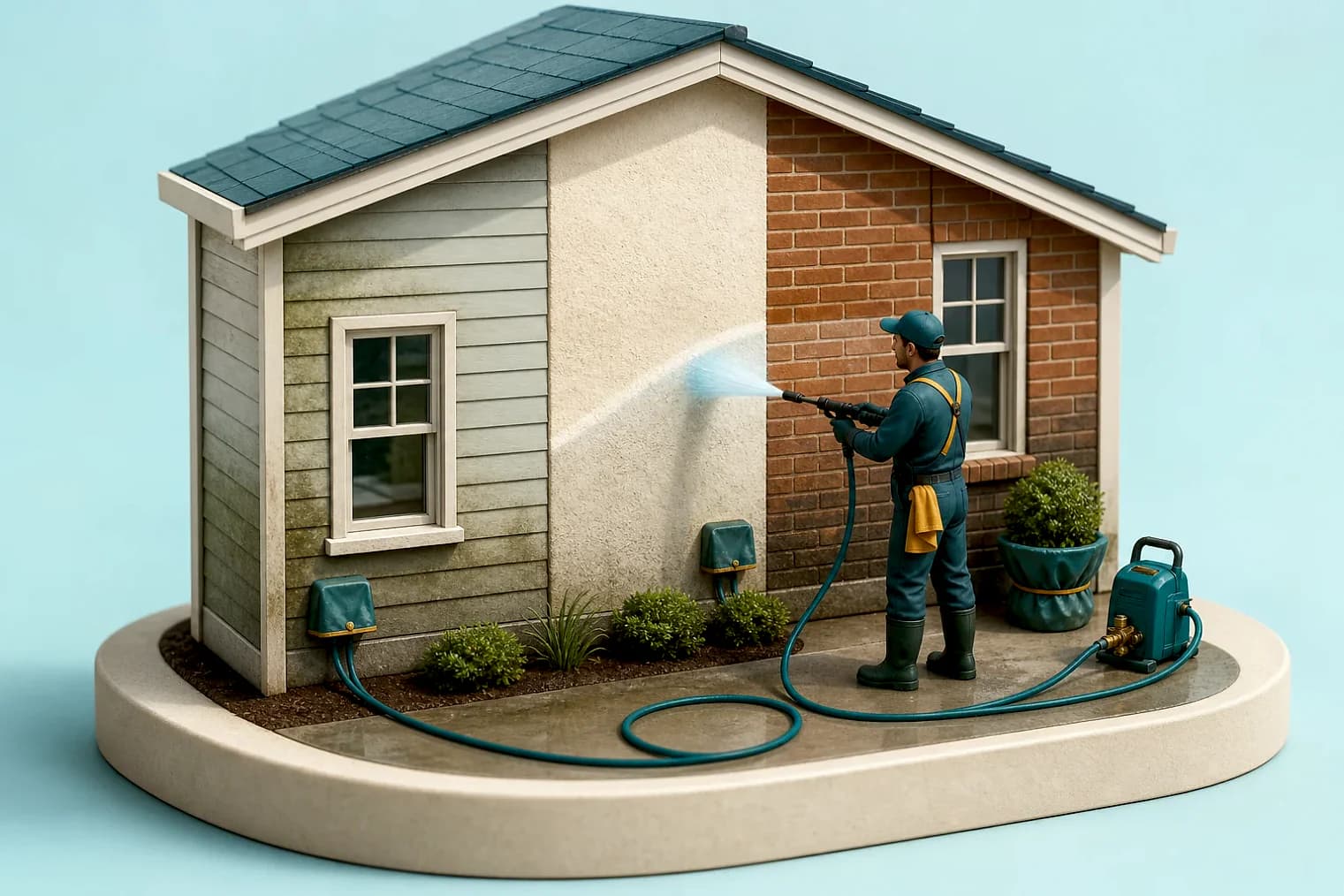
House washing is not one treatment applied to an entire elevation. A useful plan identifies every cladding and trim material, distinguishes living growth from oxidation or failed paint, and explains how solution and rinse water will be kept out of the building and away from vulnerable landscaping.
Use this guide to define the work, compare like-for-like quotes, and inspect the result. It is not a substitute for a site-specific assessment.
Start here
Is this the right service?
This service is mainly for removable surface soil and organic growth on intact exterior finishes. The material beneath the stain matters more than the machine: vinyl, painted wood, fiber cement, stucco, EIFS, brick, metal, and natural stone may need different chemistry, pressure, and dwell time on the same home.
Cleaning can reveal pre-existing fading, oxidation, chalking, cracked sealant, or failed paint. If the finish is already loose or water is entering around windows, repair should come before washing.
Usually a good fit
- Dust, cobwebs, pollen, bird residue, and superficial organic growth
- Intact siding and trim that need maintenance cleaning before sale or painting
- Multiple stories where controlled professional access is preferable to homeowner ladder work
Pause or choose another trade
- Peeling paint, open joints, leaking windows, loose render, or known moisture intrusion
- Oxidation, sun fading, efflorescence, or rust that has been mistaken for ordinary dirt
- Interior mold, pest staining, or a coating defect that requires another specialist
Scope the method
Methods worth discussing
- Low-pressure solution application and rinse for many painted, vinyl, fiber-cement, EIFS, and stucco surfaces
- Material-specific spot treatment rather than stronger chemistry over an entire elevation
- A small test area on oxidized siding, older paint, stained wood, coated metal, and unfamiliar finishes
- Controlled hand cleaning around door hardware, cameras, outlets, lights, vents, and fragile details
“Pressure washing,” “power washing,” and “soft washing” are used inconsistently. The useful details are pressure at the surface, temperature, chemistry, dwell time, agitation, rinse plan, and protection.
What a considered job looks like
From inspection to handover
- Survey the envelope
Record cladding, coatings, cracks, open penetrations, oxidation, loose components, nearby plants, slope, and access. Photograph existing defects.
- Agree on test results
Test the least conspicuous representative area. Confirm whether the mark is removable and whether rubbing or rinsing changes the finish.
- Prepare and protect
Close windows, isolate exterior power where appropriate, move furnishings, cover only what can be covered safely, and pre-wet or relocate sensitive plants.
- Clean in controlled sections
Apply the selected treatment with managed dwell time, prevent drying on glass or hot surfaces, and rinse from stable positions without driving water into laps or vents.
- Rinse and inspect
Rinse plants and adjacent materials as planned, remove coverings promptly, check fixtures and windows, and review the finish after it begins to dry.
Set expectations
What different marks may require
Green or dark organic growth
Often responds to suitable chemistry and dwell time at low pressure. Heavy colonies may leave a temporary shadow or reveal a weathered coating beneath.
Oxidation or chalking
Ordinary washing may not correct it and uneven contact can create visible streaks. Treat restoration as a separate tested scope.
Rust and irrigation minerals
Usually need stain-specific treatment. Results depend on the source, finish, and how long deposits have remained.
Artillery fungus, sap, paint, or sealant
May resist normal house washing and can require manual removal with some residual marking or finish risk.
Risks to resolve before work starts
- High pressure can etch stucco, lift paint, force water behind cladding, scar wood, and damage window or door seals
- Cleaning solution can mark coated metals, spot glass, affect plants, or react with fabrics if concentration and rinse timing are poorly controlled
- Oxidized surfaces can look uneven where hoses, brushes, or clothing touch them
- Water can enter through open vents, failed caulk, weep details, pet doors, and pre-existing envelope defects
Compare the same job
What a useful written quote includes
- Every included elevation, story, and detached structure, with approximate area or another stated pricing basis
- Cladding, trim, soffit, door, window, masonry, and accent materials
- Known organic growth, oxidation, minerals, rust, sap, insect residue, and failed finishes
- Access limits, steep grades, gates, overhead lines, water supply, and whether lifts or special equipment are included
- Plant, fixture, electrical, camera, fabric, neighbor-property, and runoff protection
- Test-area result, realistic outcome, exclusions, cleanup, and correction process
Common exclusions to make explicit
- Paint correction, oxidation removal, caulking, and repair of failed coatings
- Interior or detailed exterior window cleaning, screen cleaning, and hard-water restoration unless itemized
- Roof, gutter interiors, patios, retaining walls, and detached structures not named in the scope
- Guaranteed removal of permanent staining or correction of conditions revealed by cleaning
Before appointment day
How to prepare
- Close and latch windows and doors; report known leaks, failed seals, and openings before work
- Move vehicles, cushions, flags, toys, planters, and fragile objects beyond the overspray area
- Keep people and pets inside and arrange access to gates and exterior water
- Identify delicate or recently planted landscaping, exterior outlets, cameras, alarms, and automatic irrigation
- Tell the provider about recently applied paint, stain, sealant, or pest treatments
Do not inspect only while wet
Completion and aftercare
Walk the job before sign-off
- View each elevation from several angles after it starts drying, distinguishing remaining stains from natural fading
- Check windows, doors, screens, vents, lights, outlets, cameras, and moved items
- Confirm residue has been rinsed from plants, glass, paving, and adjacent property
- Compare unresolved marks with the approved test area and written outcome rather than expecting an unqualified like-new finish
After the crew leaves
- Allow walls, joints, and shaded areas to dry before judging color consistency
- Report suspected water entry promptly and document the location before disturbing it
- Do not paint or seal until the surface reaches the product maker's required moisture condition
- Correct irrigation overspray, drainage, vegetation contact, or leaking gutters that accelerate recurring staining
Choose deliberately
Questions for each provider
- Which materials will be soft washed, hand cleaned, or avoided, and why?
- What does the test area show about oxidation, fading, and removable staining?
- How are plants, outlets, cameras, open vents, coated metals, and neighboring property protected?
- What solution is used, how is dwell time controlled, and what happens if it dries early?
- Is exterior glass merely rinsed, or are spot-free window cleaning and screens included?
- What result is expected after drying, and how are missed areas or damage concerns handled?
Warning signs
- A firm price given without asking about the surface, condition, access, water, or photographs
- A promise that maximum pressure will remove every mark, with no test area or damage discussion
- No clear plan for protecting people, plants, adjacent property, drains, and sensitive fixtures
- A quote that does not identify the surfaces included, likely result, exclusions, and who handles cleanup
- The same pressure, nozzle, and solution are proposed for every wall and trim material
- The provider dismisses oxidation or loose paint without a rub test or test patch
Quick answers
Frequently asked questions
Will soft washing damage plants?
Any cleaning solution can affect vegetation at sufficient exposure. Ask for the provider's site-specific dilution, pre-wetting, runoff, rinse, and monitoring plan; covering plants alone can trap heat or solution.
Does house washing remove oxidation?
Not reliably. Oxidation is a changed finish rather than loose dirt. It may require a separate restoration process and a test area can reveal the risk of unevenness.
How often should a house be washed?
There is no universal interval. Shade, irrigation, vegetation, traffic dust, material, and prior growth all matter. Clean for an observed condition instead of buying an automatic annual treatment.