Practical Utah buyer guide
Parking lots and garages
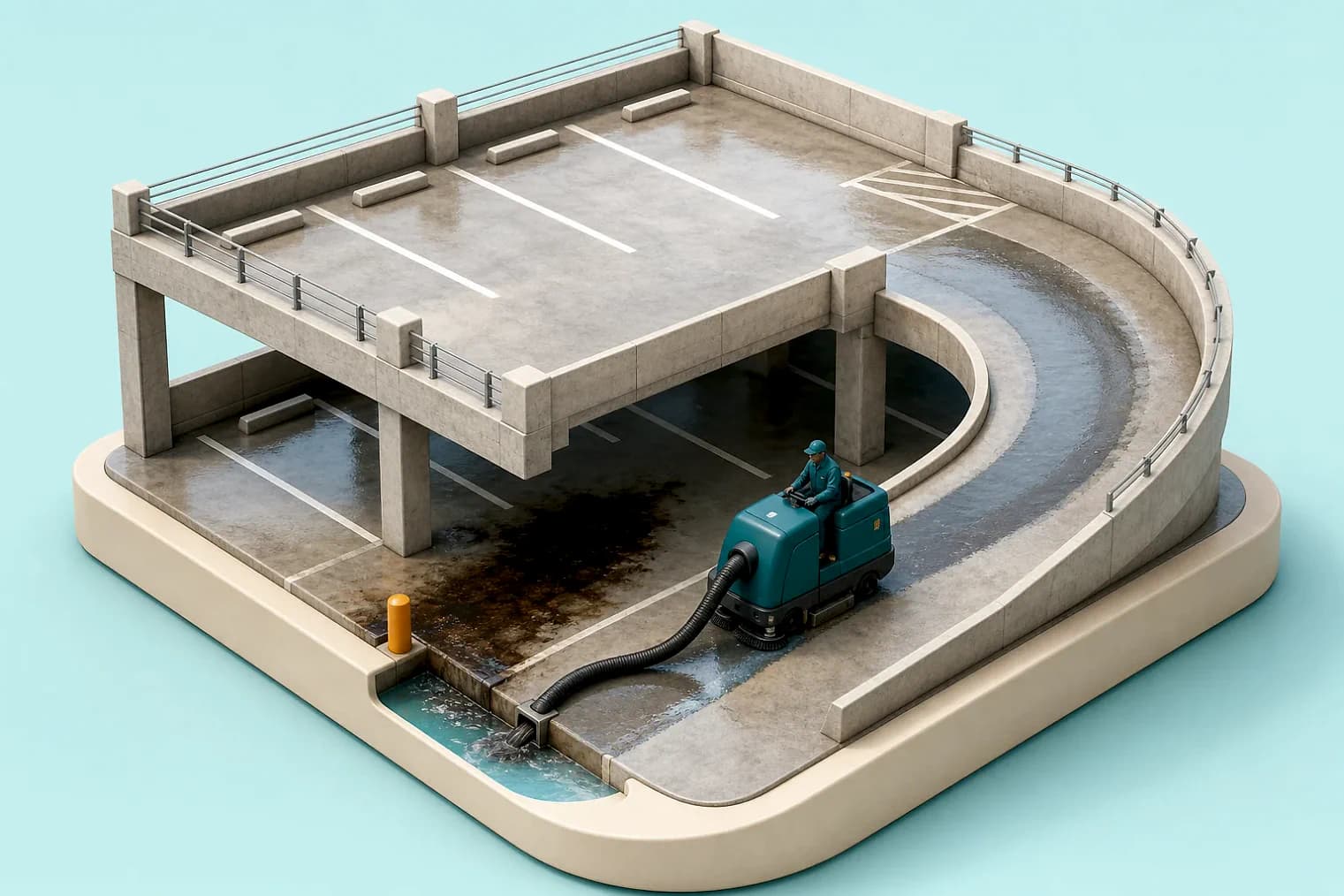
Parking lots and garages combine vehicle residue, sediment, public traffic, drains, multiple levels, and occupied space. A workable scope defines the cleaning standard by zone, the closure sequence, what is swept before washing, how oily water is managed, and exactly when each area can reopen.
Use this guide to define the work, compare like-for-like quotes, and inspect the result. It is not a substitute for a site-specific assessment.
Start here
Is this the right service?
Pressure cleaning is one part of the job. Dry sweeping, oil treatment, chewing-gum or spill work, water recovery, drain protection, and final mechanical sweeping may be separate operations. Compare the whole sequence, not just a square-foot wash rate.
Identify what lies below and where every drain goes. Water intrusion through joints and cracks, discharge to storm systems, and moving residue from one level to another can create larger problems than the original appearance issue.
Usually a good fit
- Routine sediment, surface oil residue, tire soil, and organic buildup with a defined standard
- Phased cleaning where vehicles and pedestrians can be fully excluded
- Facilities with known drainage and a feasible recovery or discharge plan
Pause or choose another trade
- Unknown hazardous spills, sewage, sharps, or contaminated absorbent
- Active structural, waterproofing, joint, or drainage failures
- Areas that cannot be cleared of vehicles or isolated from public traffic and occupied space below
Scope the method
Methods worth discussing
- Mechanical dry sweeping or vacuuming before introducing water
- Stain-specific pretreatment and agitation for compatible oil and grease deposits
- Hot-water pressure or surface cleaning where the slab and coating permit
- Vacuum recovery, berming, drain protection, or other site-specific water controls
- Hand detailing at wheel stops, columns, edges, stairs, drains, and equipment pads
“Pressure washing,” “power washing,” and “soft washing” are used inconsistently. The useful details are pressure at the surface, temperature, chemistry, dwell time, agitation, rinse plan, and protection.
What a considered job looks like
From inspection to handover
- Map zones and drainage
Record levels, bays, stalls, ramps, coatings, joints, drains, low points, sensitive areas below, soil loading, utilities, and public routes.
- Set the closure sequence
Assign towing, notices, barricades, attendants, deliveries, fire routes, accessible parking, tenant access, and weather decisions.
- Remove solids first
Sweep litter, grit, absorbent, leaves, and loose residue for appropriate disposal before washing.
- Pretreat and clean
Work by controlled zone, protect drains and occupied areas, and recover or direct water according to the agreed plan.
- Dry, inspect, and reopen
Remove pooling and residue, inspect drains and lower levels, document stains and defects, then authorize reopening zone by zone.
Set expectations
What different marks may require
Loose grit and general traffic soil
Sweeping plus washing can improve the overall area; skipping dry removal turns solids into difficult slurry.
Oil and hydraulic fluid
Fresh residue may improve substantially, while absorbed oil usually leaves a shadow. Identify active leaks and contaminated absorbent separately.
Tire marks and rubber
Heat, chemistry, or agitation may help, but coatings and polished lanes can limit treatment.
Rust, battery acid, and mineral deposits
Require specific assessment. Acid damage or deep chemical reaction may be permanent and should not be treated as routine washing.
Chewing gum, paint, and striping
These need separate methods; cleaning can damage striping or traffic coatings if compatibility is not tested.
Risks to resolve before work starts
- Vehicles or pedestrians entering wet, chemically treated, or equipment-active zones
- Oily water, sediment, and detergent reaching storm drains or migrating off site
- Water intrusion through cracks, joints, drains, elevator thresholds, and walls to occupied areas below
- Damage to traffic coatings, striping, signs, sensors, cameras, electrical equipment, and parked vehicles
- Slips, reduced traction, overspray, poor visibility, exhaust, noise, and blocked emergency routes
Compare the same job
What a useful written quote includes
- Measured area by level and zone, including ramps, stairs, loading areas, walls, columns, wheel stops, and edges
- Cleaning standard and stain schedule, with sweeping, pretreatment, heat, agitation, and gum removal listed
- Concrete, asphalt, coatings, striping, repairs, joints, drains, and vulnerable occupied areas
- Closure, towing, traffic, pedestrian, accessible route, delivery, security, and fire-access responsibilities
- Water supply, recovery, discharge approval, sediment and oily-waste disposal, and documentation
- Mobilizations, weather contingencies, drying, inspection, deficiency correction, and reopening authority
Common exclusions to make explicit
- Towing, security, traffic attendants, permits, and tenant communications unless assigned
- Hazardous-spill response, sharps, sewage, and contaminated-soil or absorbent handling
- Striping, coating, concrete, joint, drain, waterproofing, and structural repair
- Recovery equipment, transport, disposal, drain cleaning, and water supply unless itemized
- Stalls or zones not fully cleared at the agreed time
Before appointment day
How to prepare
- Issue notices and clear every scheduled stall; define towing authority before the crew arrives
- Coordinate security, deliveries, fire routes, accessible parking, elevators, stairs, alarms, and occupied areas below
- Remove or identify hazardous materials, sharps, active leaks, and unknown spills
- Confirm drain destinations, recovery setup, water and power access, lighting, ventilation, and equipment staging
- Assign one person with authority to delay work or reopen each zone
Do not inspect only while wet
Completion and aftercare
Walk the job before sign-off
- Inspect dry and wet zones for residual slurry, oil, gum, striping damage, edge buildup, and pooled water
- Check drains, joints, elevators, stairs, walls, vehicles outside the zone, and occupied levels below
- Verify waste quantities, recovery or discharge records, and disposal documentation required by the scope
- Record permanent stains, inaccessible stalls, active leaks, and repair defects separately
- Remove equipment and controls only after an authorized person approves reopening
After the crew leaves
- Retain zone photographs, incident notes, waste records, and outstanding repairs
- Treat remaining slick areas, pooled water, or winter ice before public access
- Address leaking vehicles, blocked drains, failed joints, and waterproofing defects
- Use observed loading by zone to set sweeping and washing frequency instead of one schedule for the entire facility
Choose deliberately
Questions for each provider
- What exact cleanliness standard applies to each zone and stain type?
- Are dry sweeping, oil pretreatment, gum removal, edges, drains, and final cleanup included?
- How are vehicles, pedestrians, deliveries, accessible routes, and emergency access controlled?
- How is water kept out of occupied areas and defective joints?
- Where are wash water, oil, sediment, and absorbent captured and disposed?
- Who inspects and authorizes reopening, and what records are provided?
Warning signs
- A firm price given without asking about the surface, condition, access, water, or photographs
- A promise that maximum pressure will remove every mark, with no test area or damage discussion
- No clear plan for protecting people, plants, adjacent property, drains, and sensitive fixtures
- A quote that does not identify the surfaces included, likely result, exclusions, and who handles cleanup
- There is no verified destination for oily wash water and sediment
- The facility will remain partly occupied without a detailed closure and spotter plan
- Sweeping, pretreatment, recovery, disposal, and reopening are assumed but absent from the price
Quick answers
Frequently asked questions
Can a garage stay open during cleaning?
Only with carefully isolated phases and safe alternate routes. Hoses, equipment, wet surfaces, chemicals, overspray, and traffic make casual partial closure unsafe.
Will pressure washing remove all oil?
No. Absorbed oil often leaves a shadow and may need heat, chemistry, agitation, repeat treatment, or specialist extraction.
Why sweep before washing?
Dry removal prevents grit, litter, and absorbent from becoming slurry, blocking drains, increasing recovery volume, or being pushed to another level.