This is a proposal, not today's field rule
The July 15 Utah State Bulletin proposes amendments to the state's lead-based-paint rules for definitions, residential and child-occupied-facility renovation, and lead-based-paint activities. The Division of Air Quality says the package would align Utah with federal definitions and dust standards finalized in 2024.
Written comments are due August 14. The filing lists October 7 as the date the agency anticipates the amendments may become effective, while expressly warning that it is not the effective date. A contractor should therefore check the final rule status before describing any proposed text as current Utah law.
Keep abatement levels separate from renovation work
The proposal lowers the dust levels used to identify hazards during a risk assessment and the levels used to decide when a lead abatement can be considered complete. EPA describes those as dust-lead reportable levels and dust-lead action levels.
That change is important for certified lead professionals and abatement projects, but it does not create a blanket laboratory-clearance requirement for routine exterior washing. Utah's program distinguishes lead-based-paint activities such as inspections, risk assessments, and abatement from renovation, repair, and painting work. Do not quote an abatement threshold as though it automatically governs every cleaning scope.
Screen the scope before choosing pressure or chemistry
Utah administers the authorized lead renovation program for paid contractors. Its current renovation rule covers compensated work in target housing and child-occupied facilities when the work qualifies as a renovation, and the rule defines renovation around modification of a structure that disturbs painted surfaces.
For an older painted exterior, the useful intake questions are the building's construction date and use, which surfaces are painted, the paint's condition, and whether the promised result involves removing, preparing, or otherwise disturbing that coating. A low-pressure method is not, by name alone, proof that the rule does or does not apply.
Pressure washing is permitted; migration is the control question
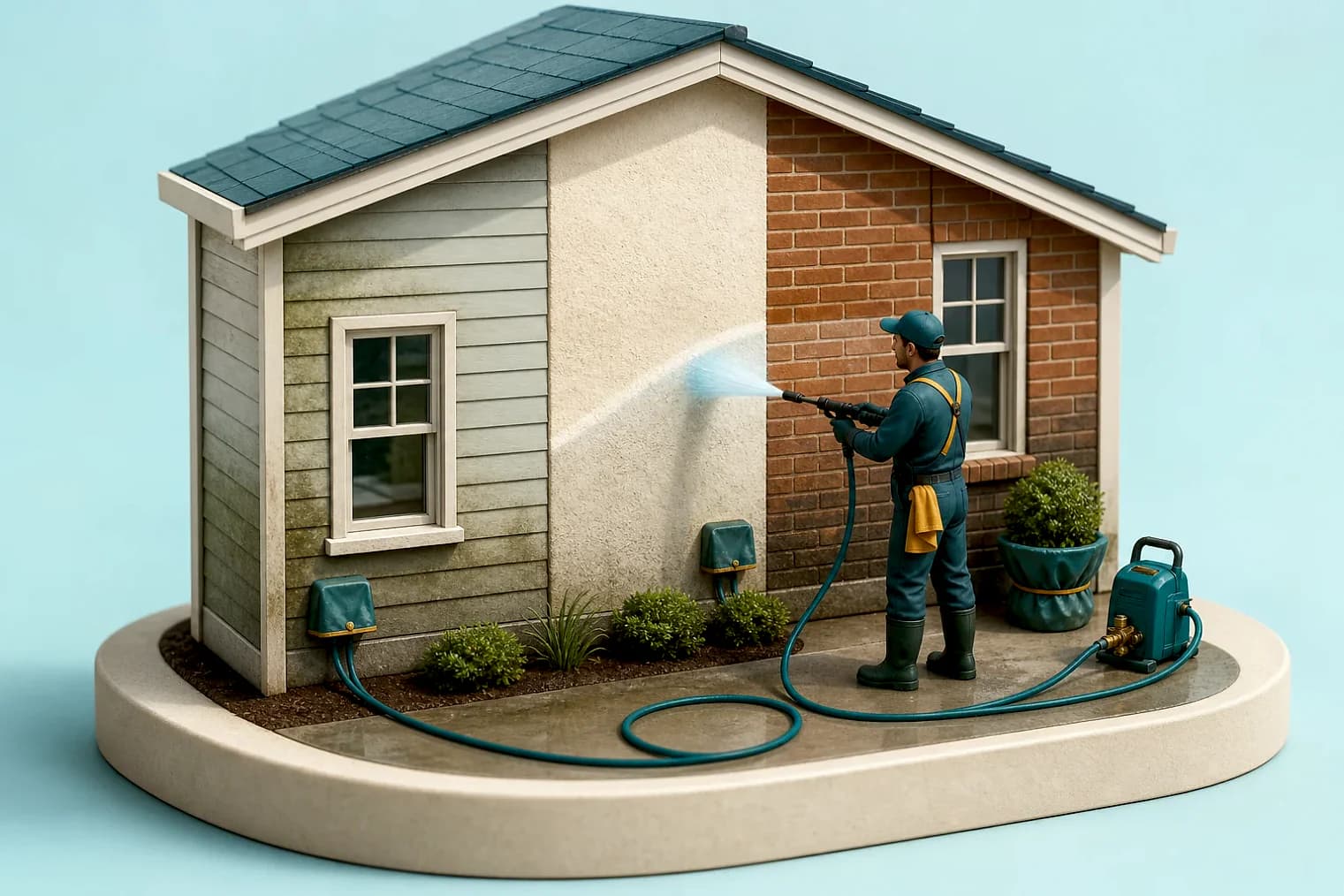
EPA's current pressure-washing answer says the method is not prohibited under the Renovation, Repair and Painting Rule. When the rule applies, the firm must isolate the work area so dust and debris—including material in wastewater—do not leave it, maintain that containment, and preserve emergency egress.
EPA also directs firms to check with the local water-treatment authority about wastewater disposal. That means a lead-safe containment plan does not, by itself, authorize a storm-drain, sanitary-sewer, landscape, or off-site disposal route. The lead and water decisions have to be documented separately.
Put a lead-scope gate in the estimate
- Record the building type, use, and best available construction-year source.
- Photograph or describe painted components and visible peeling, chalking, or failed coatings without representing that observation as a lead test.
- State whether the proposed scope is ordinary cleaning, coating preparation, paint removal, repair, or another activity expected to disturb paint.
- When applicability is uncertain, obtain a project-specific determination from Utah's Lead-Based Paint Program before promising method, containment, schedule, or price.
- If the renovation rules apply, verify firm and renovator credentials, occupant information, work practices, containment, records, and the locally accepted wastewater route before mobilizing.