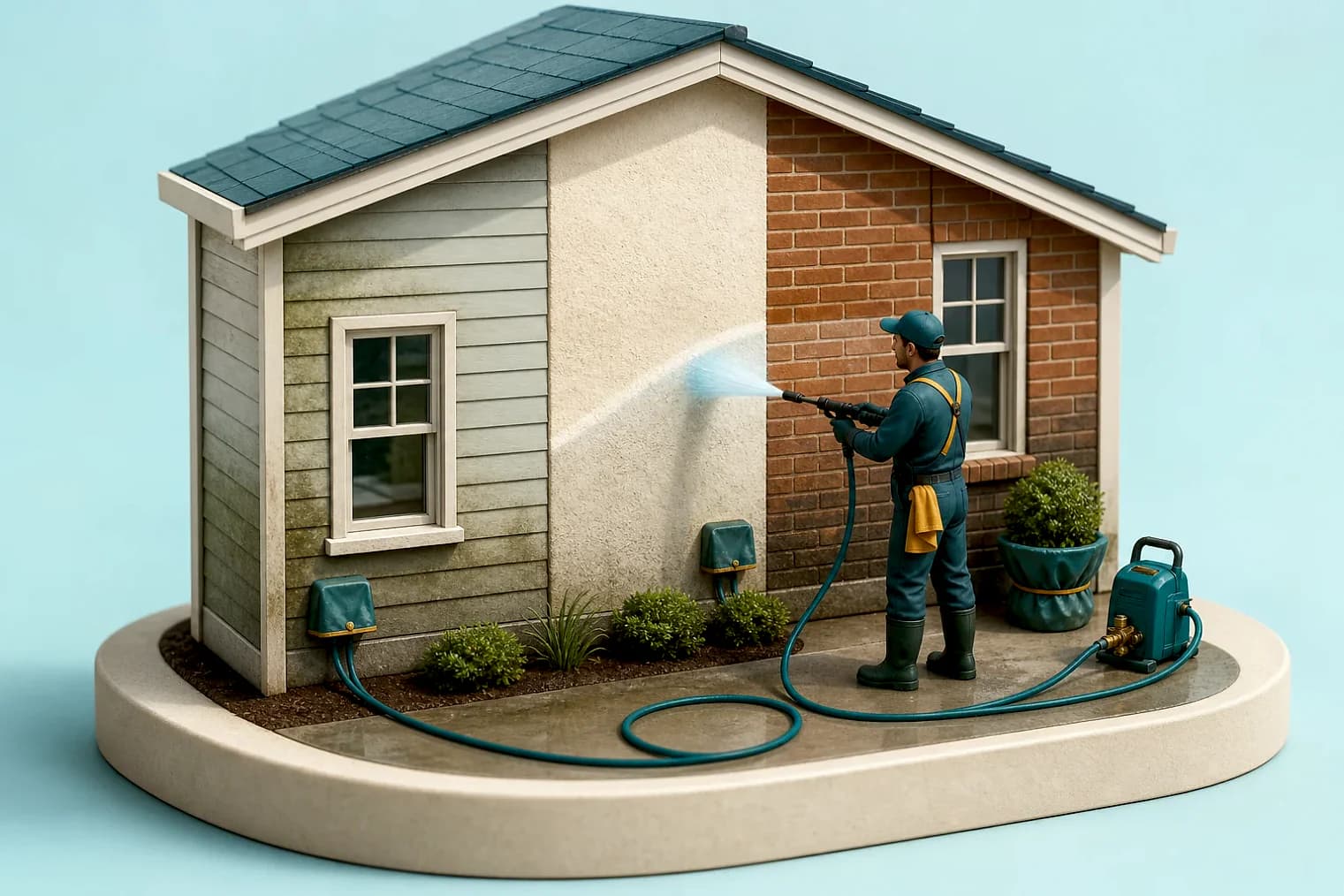
Pressure washing describes only part of the system
Pump rating, nozzle, flow, distance, angle, surface cleaner, heat, and operator pace all change what reaches the material. Record the settings that matter to the job instead of treating PSI as a quality score.
High-pressure spray can cause serious wounds that initially appear minor, throw debris, and create electrical hazards. The safe work zone and response plan belong beside the cleaning specification.
If power washing means heat, state the temperature
Many operators use power washing as a synonym for pressure washing; others mean heated water. If heat is part of the process, record the expected range and why it is appropriate for the soil and substrate.
A hot-water machine adds burn, hose, fuel, exhaust, and ventilation questions. Never allow a familiar label to hide a different hazard profile.
Soft washing shifts work to chemistry and time
Lower application pressure does not make the whole process low risk. Concentration at the surface, dwell, temperature, wind, overspray, compatibility, plant management, metal rinsing, storage, and runoff still need a plan.
Specify how the crew will verify dilution, protect adjacent materials, control public access, rinse, and decide whether another application is appropriate.
A useful method line fits on the work order
- Material and coating condition.
- Soil or stain being targeted and expected limitation.
- Test-area location and result.
- Application pressure, flow, temperature, chemistry, dwell, agitation, and rinse.
- Protection, exclusion zone, containment, recovery, and stop-work triggers.