Start with a scope another estimator can repeat
Record measured areas by material and elevation, then note coatings, damage, stains, drainage, landscaping, pedestrian or vehicle control, water access, and working height. A house square-foot figure is not automatically the exterior wall area, and a map measurement does not reveal field condition.
Use photos and a named assumption when a site visit is not available. Make the quote conditional on what must still be verified rather than silently pricing the most convenient case.
Make the operating method visible
State the expected pressure range or low-pressure application, temperature if heated water matters, chemistry class, test area, dwell and agitation, rinse, and protection. A label such as soft wash or power wash does not define those decisions by itself.
Also state what success looks like. Cleaning, brightening, oxidation removal, coating removal, and restoration are different outcomes with different risk and price.
Price runoff and access as work
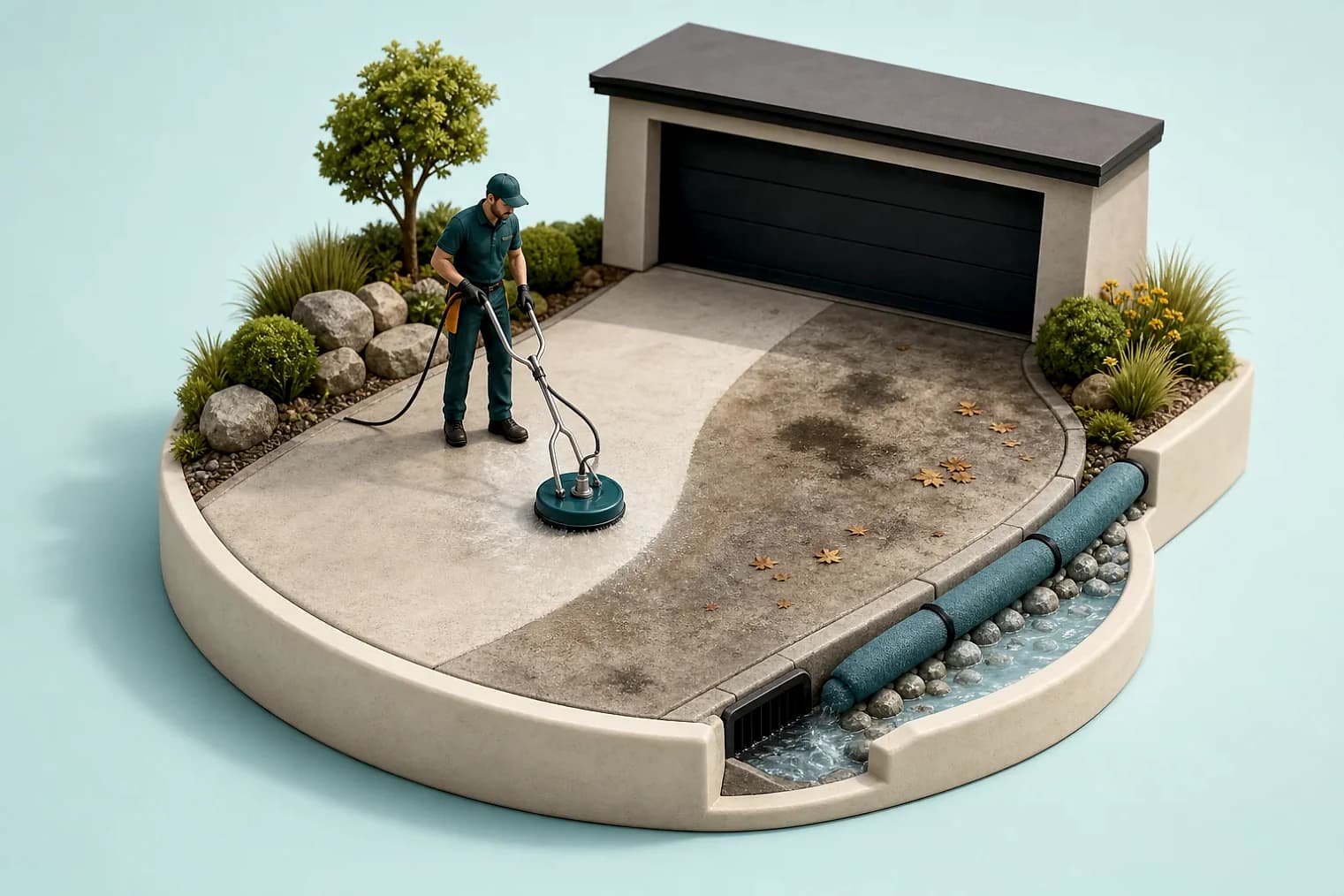
Containment, recovery, transport, disposal, lift mobilization, lane closure, night work, and a spotter can determine the crew hours more than trigger time. EPA's vehicle-and-equipment-washing BMP and Salt Lake City's local stormwater material illustrate why runoff controls are real scope items; Salt Lake City is an example, not a national rule. Put the actual job's requirements in the production plan and price rather than leaving them as an unwritten promise.
Close exclusions and changes before mobilization
- List customer-provided water and power assumptions.
- Separate specialty oil, rust, efflorescence, paint, or biological treatment.
- State whether windows, gutters, roofs, fixtures, sealing, or post-work cleanup are included.
- Define weather, access, and site-condition rescheduling.
- Use a written change record when the test area or site walk changes the method or result.